How Healthcare Startups Leverage App Development to Build Future-Ready Telemedicine, Wellness, and Clinical Data Tools
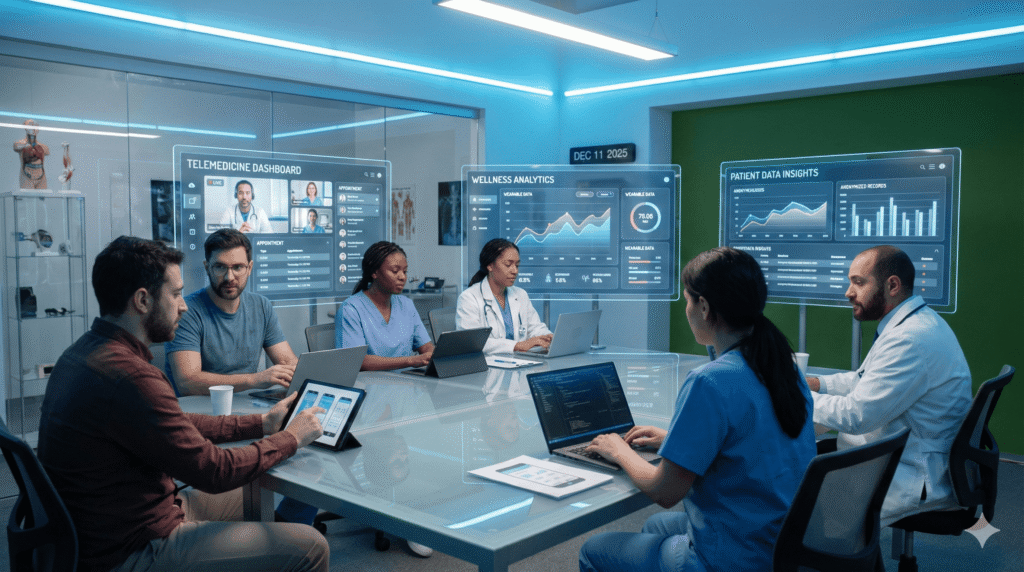
Introduction The healthcare industry is experiencing a wave of digital innovation fueled by startups that are redefining how care is delivered, monitored, and understood. With patients expecting convenience, providers seeking efficient workflows, and regulators emphasizing value-based care, healthcare startups are turning to app development to create platforms that meet modern demands. From telemedicine applications and wellness solutions to AI-powered clinical data tools, startups are using advanced technology to solve some of healthcare’s most persistent challenges. This comprehensive article explores how startups leverage app development to build scalable telehealth ecosystems, personalized wellness experiences, and robust clinical data platforms. By understanding development strategies, integration requirements, and emerging trends, healthcare organizations can better align with the digital future. =========================================== 1. The Rise of Digital Health Startups =========================================== Healthcare startups play a crucial role in modern care delivery, driven by: These factors enable startups to innovate faster than large enterprises, creating patient-centered tools that reshape the healthcare ecosystem. =========================================== 2. Telemedicine App Development: The Foundation of Modern Digital Care =========================================== Telemedicine is no longer optional—it’s a core component of healthcare delivery. Startups are using app development to build telemedicine platforms that meet clinical, regulatory, and workflow demands. 1. Secure Video Consultation Platforms Key features include: Startups focus heavily on user experience, ensuring patients and clinicians can connect without technical barriers. 2. Appointment Scheduling and Virtual Triage AI-powered triage systems evaluate symptoms and direct patients to: This reduces unnecessary visits and improves care flow. 3. Integration With EHR Systems Telehealth apps must sync with: Startups use APIs and HL7/FHIR protocols to enable seamless data exchange. 4. Remote Patient Monitoring (RPM) Telemedicine platforms often incorporate RPM tools that track: Data science models generate risk alerts and long-term insights for clinicians. =========================================== 3. Wellness App Development: Empowering Patients Beyond the Clinic =========================================== Healthcare startups recognize that wellness plays a crucial role in long-term health. Apps in this category focus on prevention, lifestyle improvement, and mental well-being. 1. Personalized Wellness Plans AI-driven personalization includes: These programs adapt as the user’s behavior and health data evolve. 2. Integration With Wearables Startups integrate with devices like: Wearable data enhances accuracy in: This creates a complete picture of patient health. 3. Mental Wellness and Behavioral Health Apps Increasingly important features include: These tools support individuals who may not have access to traditional therapy. 4. Corporate Wellness Platforms Startups collaborate with employers to offer: These solutions are rapidly growing in popularity across global organizations. =========================================== 4. Clinical Data Tools: Powering Evidence-Based Medicine =========================================== Clinical data platforms are transforming decision-making by combining data science with digital health solutions. 1. Data Aggregation Engines Startups build tools that consolidate: This solves the long-standing issue of fragmented healthcare data. 2. AI-Powered Diagnostic Aids Machine learning models help clinicians: These tools support precision medicine and earlier intervention. 3. Predictive Analytics Dashboards Healthcare providers can view: Startups design dashboards that present complex data in simple, actionable formats. 4. Decision Support Tools for Clinicians These include: Decision support tools help reduce medical errors and enhance safety. =========================================== 5. Technology Stack Behind Healthcare App Development =========================================== To build scalable, secure, and high-performing apps, startups typically rely on: 1. Programming Languages and Frameworks These technologies support fast development and cross-platform compatibility. 2. Cloud Infrastructure Providers include: Cloud environments support high scalability and secure storage of healthcare data. 3. Data Science & Machine Learning Tools These power real-time healthcare insights. 4. Interoperability Standards Startups must support: This ensures smooth integration with hospitals and health systems. =========================================== 6. Regulatory and Compliance Considerations =========================================== Healthcare app development requires strict adherence to compliance frameworks. 1. HIPAA Covers: 2. FDA Regulations Some apps qualify as medical devices and require FDA clearance. 3. Data Privacy Laws Including: Compliance ensures trust and legal protection. =========================================== 7. Challenges Healthcare Startups Face =========================================== Despite rapid growth, startups encounter: 1. Integration Complexity Healthcare systems use: Startups must build flexible integration solutions. 2. Security Threats Cyberattacks target healthcare because of valuable data.Startups must invest heavily in cybersecurity. 3. Clinical Adoption Clinicians may resist new technology unless: 4. Reimbursement Uncertainty Policies for digital health reimbursement evolve continuously.Startups must monitor CMS and commercial payer updates. =========================================== 8. The Future of Digital Health Startups =========================================== The next generation of apps will use: Healthcare startups will play a central role in shaping the future of global healthcare delivery. Conclusion Healthcare startups are reshaping the landscape of care through innovative app development across telemedicine, wellness, and clinical data intelligence. By leveraging modern technologies—including AI, machine learning, cloud computing, advanced interoperability standards, and user-centered design—startups are creating solutions that not only solve current challenges but also prepare healthcare for the future. Telemedicine platforms improve accessibility, wellness apps enhance long-term health, and clinical data tools revolutionize diagnostic precision and operational efficiency. Together, these innovations represent the new standard of digital-first healthcare, empowering providers and patients alike.
Healthcare Data Analytics: What It Is and Why It Matters in Modern Care Delivery
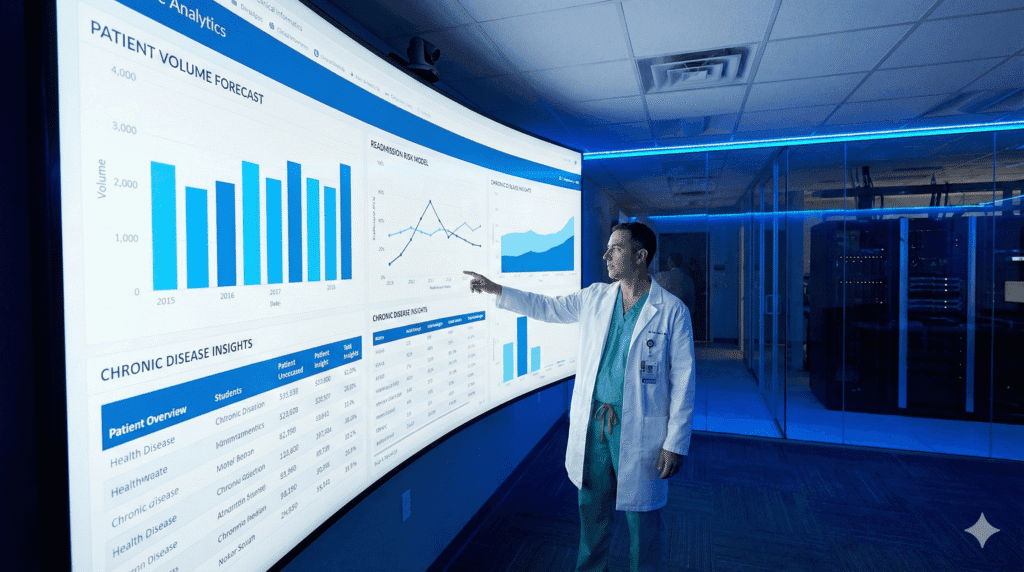
Introduction Healthcare is an industry built on data—from patient histories and diagnostic imaging to laboratory results, claims files, and operational metrics. Yet for decades, much of this data remained untapped, isolated in fragmented systems and unstructured formats. The digital transformation of healthcare, combined with the rise of analytics and machine learning, has unlocked a new era where data becomes actionable intelligence. Healthcare data analytics refers to the systematic examination of medical, operational, and financial data to improve patient outcomes, optimize workflows, and support value-based care. This article explores what healthcare analytics is, how it works, why it matters, and how organizations are using it to transform both clinical and administrative performance. =========================================== 1. What Is Healthcare Data Analytics? =========================================== Healthcare data analytics involves applying statistical techniques, predictive modeling, and data mining to healthcare information. Its purpose is to uncover trends, identify patterns, and support decisions across clinical, financial, and operational domains. Analytics can be applied to a wide array of data sources, including: The result is a deeper, more holistic understanding of both individual patients and broader populations. =========================================== 2. Types of Healthcare Analytics =========================================== Healthcare analytics is typically categorized into four main types, each serving a different purpose in the decision-making process. 1. Descriptive Analytics — Understanding What Happened Descriptive analytics answers questions like: It summarizes historical data to make trends and patterns visible. 2. Diagnostic Analytics — Understanding Why It Happened Diagnostic analytics digs deeper by analyzing: Example:If a hospital saw an unexpected rise in postoperative infections, diagnostic analytics could identify contributing factors such as: 3. Predictive Analytics — Understanding What Will Happen Predictive analytics uses machine learning and statistical algorithms to forecast outcomes such as: These insights help clinicians and administrators anticipate problems before they arise. 4. Prescriptive Analytics — Understanding What Should Be Done This is the most advanced type of analytics. It recommends actions based on predictive models. Examples: Prescriptive analytics drives proactive, rather than reactive, healthcare management. =========================================== 3. Why Healthcare Data Analytics Matters =========================================== Analytics has become essential to modern healthcare, and its impact spans multiple areas of care delivery. 1. Improving Patient Outcomes Healthcare analytics enhances outcomes by: Clinicians gain clarity, and patients receive more precise care. 2. Enabling Personalized and Precision Medicine Analytics helps tailor treatments using: Personalized medicine reduces trial-and-error care and improves therapeutic effectiveness. 3. Reducing Medical Errors Medical errors often stem from: Analytics flags anomalies and assists clinicians with real-time alerts, reducing risk and enhancing patient safety. 4. Enhancing Operational Efficiency Administrators use analytics to: This leads to smoother workflows and improved patient satisfaction. 5. Supporting Value-Based Care Models Healthcare is shifting from fee-for-service toward value-based care, which rewards: Analytics supports: Without analytics, value-based care cannot succeed. =========================================== 4. Key Use Cases of Healthcare Data Analytics =========================================== Analytics has practical applications across nearly every aspect of healthcare. 1. Readmission Prevention Predictive models identify patients most likely to be readmitted and help design targeted interventions. 2. Chronic Disease Management Analytics tracks long-term data trends for conditions like: Early detection of worsening trends helps prevent hospitalizations. 3. Emergency Department Optimization Real-time analytics: This reduces crowding and improves emergency care delivery. 4. Population Health and Public Health Monitoring Analytics helps organizations: This makes healthcare systems more resilient and better prepared for crises. 5. Financial Performance Management Organizations use analytics to: This strengthens financial sustainability. =========================================== 5. The Role of Machine Learning in Healthcare Analytics =========================================== Machine learning models significantly elevate the accuracy and value of analytics. 1. Predictive Risk Models These models analyze clinical, demographic, and behavioral data to predict: 2. Natural Language Processing (NLP) NLP extracts meaning from unstructured data such as: This unlocks insights hidden in text-based documentation. 3. Advanced Pattern Recognition AI systems detect patterns humans might miss, such as: This improves care precision and diagnostic accuracy. =========================================== 6. Challenges in Implementing Healthcare Analytics =========================================== While analytics offers significant benefits, healthcare organizations face several challenges. 1. Data Fragmentation Patient data is often stored in: Integrating these systems is essential. 2. Data Quality Issues Incomplete, inconsistent, or inaccurate data undermines analytics and AI models. 3. Privacy and Security Requirements Organizations must comply with: Data breaches can have severe consequences. 4. Shortage of Skilled Personnel Healthcare often lacks: Training and collaboration become crucial. =========================================== 7. The Future of Healthcare Data Analytics =========================================== The next phase of healthcare analytics includes innovations such as: Healthcare analytics is evolving into a core strategic asset for organizations worldwide. Conclusion Healthcare data analytics is more than a tool—it is a transformative force reshaping how care is delivered, financed, and improved. By providing deeper insight into patient trends, operational performance, and population health, analytics empowers healthcare organizations to make smarter decisions and deliver better outcomes. As digital health expands and data continues to grow, the importance of healthcare analytics will only increase, making it a foundational pillar of modern medical practice.
How Data Science Enhances Diagnostic Accuracy, Reduces Medical Errors, and Enables Faster Clinical Decision-Making

Introduction Healthcare is undergoing a profound transformation driven by the rapid growth of clinical data and the increasing need for precision in diagnosis and treatment. Data science—using algorithms, analytics, machine learning, and statistical modeling—has become essential in improving diagnostic accuracy, reducing medical errors, and accelerating clinical decision-making. Whether analyzing imaging studies, lab patterns, patient histories, or real-time monitoring data, data science equips healthcare providers with deeper insights and actionable intelligence. In this in-depth article, we explore how data science is changing the landscape of modern medicine, strengthening clinical workflows, improving patient safety, and supporting providers in making informed decisions. As healthcare systems continue to evolve, understanding the role of data science is essential for clinicians, administrators, researchers, and technology teams. =========================================== 1. How Data Science Improves Diagnostic Accuracy =========================================== Diagnostic precision is at the heart of effective healthcare. Traditional diagnostics rely heavily on clinician experience and manual interpretation, but data science enhances this process through automation, pattern recognition, and advanced analytics. 1. Using Predictive Modeling to Identify Diseases Earlier Predictive models analyze thousands of variables simultaneously, identifying patterns that clinicians might not detect in time. Examples: These models estimate likelihoods with remarkable accuracy, giving clinicians an early warning. 2. Enhancing Radiology Through Machine Learning Medical imaging produces more data than any human can analyze alone. Data science tools can: AI-powered imaging systems are now common in: This dramatically improves accuracy and reduces missed diagnoses. 3. Improving Lab Interpretation Data science analyzes: By comparing these findings to millions of historical datasets, AI provides interpretation suggestions that help guide further testing. =========================================== 2. How Data Science Reduces Medical Errors =========================================== Medical errors remain a significant challenge, contributing to preventable harm and increased healthcare costs. Data science reduces errors through automation, alerts, and consistent clinical decision assistance. 1. Automated Clinical Alerts in the EHR Data science models help EHR systems recognize: These alerts notify clinicians before a minor issue becomes life-threatening. 2. Standardizing Documentation and Reducing Ambiguity Natural Language Processing (NLP) tools analyze clinical notes for: By prompting clinicians to clarify information, data science reduces documentation-related mistakes. 3. Improving Medication Safety Data-driven medication tools evaluate: These safeguards prevent harmful prescribing errors. 4. Reducing Diagnostic Variability Clinicians vary in training, experience, and interpretation. Data science: This leads to more equitable and reliable care. =========================================== 3. How Data Science Enables Faster Clinical Decision-Making =========================================== Clinicians often work under substantial time pressure, managing large caseloads and increasingly complex patients. Data science accelerates decision-making by consolidating data, highlighting insights, and providing predictive recommendations. 1. Real-Time Dashboards for Clinical Situational Awareness Modern clinical dashboards use data science to display: These tools help clinicians make decisions in seconds rather than minutes. 2. Predictive Triage and Risk Stratification Emergency departments use data science to: This optimizes patient flow and reduces wait times. 3. Supporting Chronic Disease Management Chronic disease care requires long-term monitoring. Data science supports: These insights allow clinicians to intervene earlier. 4. Accelerating Research and Clinical Trials Data science automates: This reduces research time from months to minutes. =========================================== 4. Real-World Use Cases of Data Science in Healthcare =========================================== 1. Sepsis Detection Machine learning models detect sepsis 3–6 hours earlier than traditional scoring systems. 2. Cardiology Risk Prediction Algorithms predict: 3. Oncology Diagnostics Data science identifies tumor progression, genomic markers, and treatment responsiveness. 4. Population Health Predictive analytics identifies communities at high risk for certain diseases. 5. Personalized Medicine AI tailors treatments to each patient’s genetic and clinical profile. =========================================== 5. Challenges and Ethical Considerations =========================================== Despite its benefits, data science must be used responsibly. 1. Data Privacy and Security Compliance with: is non-negotiable. 2. Algorithmic Bias Biased datasets may result in inequitable care.Continuous validation is essential. 3. Transparency and Explainability Clinicians must understand: Black-box models can undermine trust. 4. Data Quality Issues Garbage in = garbage out.High-quality datasets are essential for accurate predictions. =========================================== 6. The Future of Data Science in Healthcare =========================================== The future points toward: Data science will evolve from a supportive tool into a core component of healthcare delivery. Conclusion Data science is fundamentally reshaping healthcare by improving diagnostic accuracy, reducing harmful medical errors, and enabling faster and more informed clinical decision-making. Its power lies in its ability to convert complex data—clinical notes, imaging, labs, and real-time monitoring—into actionable insights that clinicians can rely on. As health systems continue to adopt AI-driven tools, data science will play an increasingly central role in creating safer, more efficient, and more personalized care environments.