AI in Revenue Cycle Management: How Intelligent Automation Is Fixing What Broke Healthcare Billing

The Billing System Was Never Built to Handle This Much Complexity Healthcare billing is broken. Not slightly off — structurally, fundamentally broken in ways that have compounded quietly for decades. Talk to any RCM director who’s been in this industry longer than ten years and they’ll tell you the same thing: the workflows haven’t changed, but everything around them has gotten dramatically harder. More payer rules. More code specificity. More prior auth. More denials. And somehow, the expectation is that the same lean billing teams — often understaffed, consistently under-resourced — will absorb all of it without missing a beat. They can’t. And the numbers in 2026 make that impossible to ignore. Initial claim denials hit 11.8% in 2024, up from 10.2% just a few years earlier. The trajectory since then has only gotten steeper. In 2022, 30% of providers reported that at least 10% of their claims were denied. By 2024, that figure had grown to 38%. In 2025, 41% of providers reported denial rates exceeding 10%. That’s not a trend. That’s a slow-motion financial crisis, and it’s accelerating. Healthcare denial rates have surged to 11% of all claims, costing providers $19.7 billion annually in denial management expenses alone — and that doesn’t account for delayed revenue, staff burnout, or strategic resources diverted from growth to administrative firefighting. Meanwhile, the U.S. RCM market now totals approximately $90.6 billion and is projected to reach nearly $308 billion by 2030 — a market growing precisely because the problem it serves keeps getting bigger. Artificial intelligence isn’t a magic wand. But in revenue cycle management, it’s becoming the most consequential operational tool the industry has seen in a generation. The question isn’t whether AI belongs in your billing workflow anymore. That debate is over. The question now is how far behind you’re willing to fall before you act. What Does “AI in RCM” Actually Mean? Let’s be precise — because the term gets abused constantly. Every software company slaps “AI-powered” on their dashboard and calls it innovation. So before anything else, let’s define what’s actually happening. Real AI in revenue cycle management means deploying machine learning, natural language processing, robotic process automation, and predictive analytics across the entire financial and administrative workflow — from patient scheduling all the way through final payment posting. It’s not a single tool. It’s a stack of intelligent systems operating simultaneously across multiple touchpoints. A machine learning model that scores denial risk before a claim leaves your system. An NLP engine that reads physician notes and suggests ICD-10 and CPT codes with documented rationale. An RPA bot that verifies insurance eligibility overnight without anyone asking it to. A predictive analytics layer that surfaces underpayments your team would never catch manually at scale. As of 2026, this is no longer theoretical. 63% of healthcare organizations have already integrated AI-powered automation into their revenue cycle workflows, and 80% of health systems report actively exploring, piloting, or implementing generative AI tools for RCM — a 38-percentage-point increase in under two years. The market is moving. The question for every practice and health system is whether they’re moving with it. Where Traditional RCM Falls Apart Here’s something the industry still doesn’t say loudly enough: traditional revenue cycle management was never designed for the environment it currently operates in. It was engineered for a simpler era — fewer payers, simpler code sets, far less compliance overhead. The fragility was baked in from the start. Clinical documentation happens at the point of care. Coders interpret that documentation — often days later, sometimes with incomplete context. Billers translate codes into claims. Payers process or reject. Every single handoff is a risk point, and the volume of those handoffs has grown dramatically over the past decade. Experian Health’s 2025 State of Claims data shows that 26% of practices trace at least one in 10 denials back to intake errors: wrong policy numbers, outdated insurance cards, and missed eligibility rechecks. These aren’t complex clinical disputes. They’re administrative failures happening at the front door, before the patient has even sat down. Then there’s prior authorization. A 2022 AMA survey found that physicians and staff spend an average of nearly 13 hours per week managing prior authorizations — time spent navigating payer-specific portals, compiling clinical documentation, and following up on pending requests for services that, in many cases, could have been flagged and resolved before the appointment was scheduled. And the financial consequences compound relentlessly. An HFMA Pulse Survey shows hospitals lose an average of 4.8% of net revenue to denials. Meanwhile, HFMA reports that up to 65% of denied claims are never reworked — meaning a significant share of that lost revenue gets written off without a fight. Not appealed. Not corrected. Just gone. One in three hospitals now reports bad debt levels exceeding $10 million — a number that reflects years of accumulated leakage from a system that was never built to catch it. Key Areas Where AI Is Making a Measurable Difference 1. Stopping Denials Before They Happen This is where AI delivers its fastest, clearest ROI. Old-school claims scrubbing worked from static rule sets — if a claim has modifier 59 without a supporting diagnosis, flag it. Useful, but it only catches what you already know to look for. It doesn’t learn. It doesn’t adapt. And payer rules change constantly. AI-powered denial prevention learns from your historical submission data, identifies patterns in what your specific payers reject, and scores incoming claims against those patterns before they ever leave your system. The technology doesn’t just catch today’s errors — it anticipates tomorrow’s. The results are significant. Practices implementing AI-supported eligibility verification have reported cutting denial rates by as much as 42%, according to Experian Health case data. At the system level, Deloitte’s Center for Health Solutions found that automated claim-scrubbing and predictive validation can prevent up to 85% of avoidable denials, reducing administrative cost per claim by nearly one quarter. That 85% figure deserves a real pause. Most organizations have spent years accepting double-digit
Seekde Explained: How Modern Search Technology Is Powering Healthcare, Clinical Decision-Making, and Data Science

Introduction In the age of digital healthcare, clinicians, researchers, data scientists, and administrators depend on rapid access to accurate, context-rich information. Traditional search engines are not built for the complexity of medical terminology, multi-layered patient data, or specialized healthcare documentation. This is where Seekde, a modern AI-powered search and discovery platform, reshapes how healthcare organizations find and interpret information. Seekde uses semantic intelligence, natural language understanding, and machine learning to deliver results that are not only accurate but deeply contextualized. Instead of matching keywords, Seekde interprets meaning, identifies intent, and retrieves the information most relevant to clinical or analytical needs. This comprehensive guide explains how Seekde works, why it is transforming healthcare workflows, and how it supports better decision-making across clinical, operational, and data science environments. =========================================== 1. The Challenge of Information Overload in Healthcare =========================================== Healthcare generates enormous volumes of data and documentation: Most of this information is unstructured, meaning it cannot be easily analyzed by traditional search systems that rely primarily on keyword matching. Problems with Traditional Search in Healthcare These limitations directly impact patient care, clinical efficiency, research progress, and administrative workflows. =========================================== 2. What Is Seekde? =========================================== Seekde is a specialized, AI-enhanced search platform built specifically for healthcare and medical data science environments. It goes far beyond keyword search by understanding the meaning behind queries and the context surrounding medical terminology. Seekde uses: The result is a search experience tailored to how healthcare professionals think, speak, document, and make decisions. =========================================== 3. How Seekde’s Semantic Search Works =========================================== At the core of Seekde is semantic understanding—the ability to interpret intent and context. Example: A clinician searches for:“Treatment for acute systolic heart failure with renal complications.” Traditional search returns: Seekde understands: Seekde retrieves: This context-aware retrieval saves clinicians significant time and improves care accuracy. =========================================== 4. Key Features of Seekde in Healthcare Settings =========================================== Seekde’s specialized features directly address the challenges of clinical and analytical environments. 1. Semantic Understanding of Medical Terminology Seekde interprets: This removes ambiguity that often disrupts clinical search workflows. 2. Context-Based Ranking of Results Seekde prioritizes: Clinicians receive the most actionable information at the top of search results. 3. Structured and Unstructured Data Search Seekde can search across: This unified search experience is impossible with legacy systems. 4. NLP-Powered Content Extraction Seekde analyzes large documents and pulls out: This enables clinicians and analysts to understand documents without reading them in full. 5. Intelligent Filters and Medical Ontology Mapping Seekde maps search queries to: This mapping is invaluable for: 6. Learning From User Behavior Seekde becomes smarter over time by analyzing: This adaptive learning makes results more personalized and accurate. =========================================== 5. Use Cases Across Healthcare and Data Science =========================================== Seekde supports a wide range of stakeholders across healthcare. 1. Clinicians Doctors and nurses use Seekde to: This reduces cognitive load and supports faster decision-making. 2. Medical Coders & CDI Specialists Seekde accelerates: By understanding context and terminology, Seekde helps coders avoid errors that lead to claim denials. 3. Healthcare Researchers Seekde organizes and retrieves: Researchers can find relevant evidence far more quickly. 4. Data Scientists & AI Engineers Seekde provides: This strengthens machine learning model development. 5. Hospital Administration Administrators use Seekde to search: This supports audit preparation and governance. =========================================== 6. Benefits of Seekde in Modern Healthcare =========================================== Seekde delivers measurable improvements in productivity and clinical accuracy. 1. Saves Time Clinicians spend hours weekly searching for information.Seekde reduces that time by up to 80%. 2. Improves Diagnostic Confidence Accurate, context-rich search results support: 3. Reduces Documentation Errors Seekde helps coders and CDI teams ensure: This reduces denials and revenue loss. 4. Enhances Medical Research Productivity Researchers access well-organized, relevant datasets faster. 5. Supports Healthcare AI Model Development Seekde assists AI teams by: This leads to higher-performing healthcare AI systems. =========================================== 7. Challenges and Considerations =========================================== Despite its advantages, adopting Seekde requires planning. 1. Privacy & Compliance As a healthcare information system, it must adhere to: 2. Integration With Existing Systems Seekde may require integration with: This should be handled by a trained IT team. 3. User Adoption Training clinicians and staff to use semantic search ensures maximum benefit. =========================================== 8. The Future of Healthcare Search =========================================== Search in healthcare is moving toward: Seekde represents the foundation of this next generation of intelligent clinical search. Conclusion Seekde is more than a search engine—it is a clinical intelligence companion. By utilizing semantic understanding, natural language processing, and healthcare-specific machine learning, it transforms how information is retrieved and used across healthcare environments. For clinicians, Seekde accelerates clinical decision-making. For coders, it clarifies documentation. For researchers and data scientists, it improves the discovery of relevant insights. And for administrators, it simplifies the navigation of complex regulations. In a world where accurate information can mean the difference between a correct diagnosis and a missed opportunity, Seekde stands as a powerful tool supporting healthcare’s digital transformation. As AI continues to evolve, platforms like Seekde will become indispensable for managing the ever-growing landscape of medical knowledge.
Introduction to DGH A: The Advanced Eye Measurement Tool Transforming Ophthalmic Diagnostics
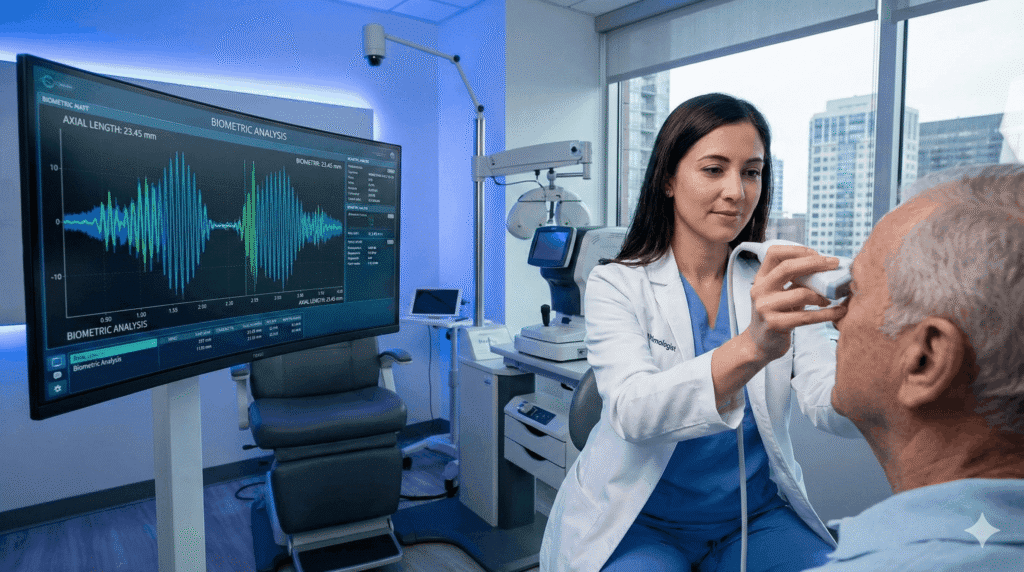
Introduction Ophthalmology is a specialty where precision is not optional—it is fundamental. Accurate measurement of ocular structures determines the success of refractive surgeries, cataract procedures, and numerous clinical decisions. In recent years, technological innovation has significantly improved how eye care specialists measure axial length, corneal curvature, and other biometric parameters. At the center of this advancement stands DGH A, an advanced ultrasound-based eye measurement device designed to deliver reliable, repeatable, and clinically meaningful data. This in-depth guide explores the science behind DGH A, its diagnostic relevance, clinical advantages, integration with digital health systems, and the reasons it has become a preferred tool in modern ophthalmic practices. Whether you are an ophthalmologist, optometrist, technician, or digital health leader, this article will help you understand why high-precision biometry is increasingly central to contemporary eye care. =========================================== 1. The Role of Biometry in Ophthalmology =========================================== Ocular biometry involves measuring the physical dimensions of the eye, including: These measurements are essential for: Even small deviations—sometimes as little as 0.1 mm—can fundamentally change surgical outcomes. Why Precision Matters In cataract surgery, for example: Given these stakes, devices like DGH A have become indispensable. =========================================== 2. What Is DGH A? =========================================== DGH A is an A-scan (amplitude scan) ultrasound biometer engineered for accuracy, consistency, and ease of use. It employs high-frequency ultrasound waves to precisely measure the internal structures of the eye and convert the data into biometric calculations used for clinical and surgical planning. Unlike older manual measurement tools, DGH A: Its core advantage lies in its automated waveform analysis, which reduces user dependence and minimizes human error in measurement interpretation. =========================================== 3. Key Features and Technical Capabilities =========================================== DGH A stands out for its blend of advanced ultrasound technology and intuitive software. Its features can significantly streamline eye care workflows. 1. High-Precision Axial Length Measurement DGH A uses: This allows clinicians to obtain reliable measurements across a wide variety of eyes, including: 2. Automated Waveform Analysis One of DGH A’s signature capabilities is automated waveform interpretation. Benefits include: This enables more consistent results across technicians and appointments. 3. User-Friendly Interface The system includes: Technicians appreciate its minimal learning curve, while surgeons value its reliability. 4. Built-In Database and EMR Integration Modern ophthalmology relies on digital workflow connectivity. DGH A supports: This ensures that measurements are accessible wherever clinicians need them. 5. Portability and Clinical Flexibility DGH A is compact and portable, making it ideal for: The device supports both direct contact and immersion measurement techniques. =========================================== 4. Clinical Applications of DGH A =========================================== DGH A supports a broad range of clinical and surgical workflows in ophthalmology. 1. Cataract Surgery Planning IOL power calculation is the single most critical element of cataract surgery.DGH A improves: Patients gain better postoperative outcomes and fewer refractive surprises. 2. Refractive Surgery For LASIK, PRK, and lens-based procedures, surgeons require precise biometric analysis. DGH A assists in: 3. Evaluation of Ocular Pathologies The ultrasound technology enhances diagnosis in cases such as: These measurements influence long-term disease management. 4. Pediatric Ophthalmology Children often present with complex measurement challenges.DGH A: Surgeons rely on its accuracy for pediatric cataract and refractive planning. =========================================== 5. Benefits of DGH A in Modern Ophthalmic Practice =========================================== The impact of DGH A extends beyond its technical features. 1. Higher Measurement Accuracy The automatically interpreted A-scan waveforms eliminate ambiguity and improve confidence in clinical decisions. 2. Better Clinical Outcomes Because refractive surgery outcomes depend heavily on accurate measurements, DGH A supports: 3. Workflow Efficiency DGH A reduces: This improves the consistency of your surgical workups. 4. Supports Digital Transformation in Eye Care By integrating seamlessly with EMR and imaging systems, DGH A aligns with the broader shift toward: =========================================== 6. Integration With Healthcare AI Systems =========================================== While DGH A itself is an ultrasound measurement tool, its outputs are increasingly used by AI-powered ophthalmic platforms. AI enhancements include: As AI becomes more embedded in eye care technology, devices like DGH A will play a foundational role in supplying accurate biometric inputs. =========================================== 7. Challenges and Best Practices =========================================== 1. Operator Training Despite its automation, correct probe placement and patient cooperation are still essential. 2. Consistency in Measurement Technique Switching between contact and immersion techniques can create variation. 3. Interpretation of Out-of-Norm Signals Clinicians should verify measurements that fall outside normal ranges. 4. Integration Readiness Practices should ensure EMR systems support ultrasound biometry integration. Conclusion DGH A has become a critical tool for today’s ophthalmologists, combining the precision of ultrasound biometry with the efficiency of automated waveform analysis. Whether used for cataract surgery planning, refractive procedures, or the evaluation of ocular diseases, DGH A provides clinicians with the accuracy required to make informed, confident decisions. As digital health, AI, and predictive analytics continue transforming eye care, high-quality biometric inputs—like those provided by DGH A—will become even more essential. By adopting advanced tools such as DGH A, clinics not only improve diagnostic precision but also elevate the overall patient experience, reduce surgical error risk, and align with the future of ophthalmic technology.
How Healthcare AI Transforms Patient Care by Turning Complex Clinical Stories Into Actionable Insights
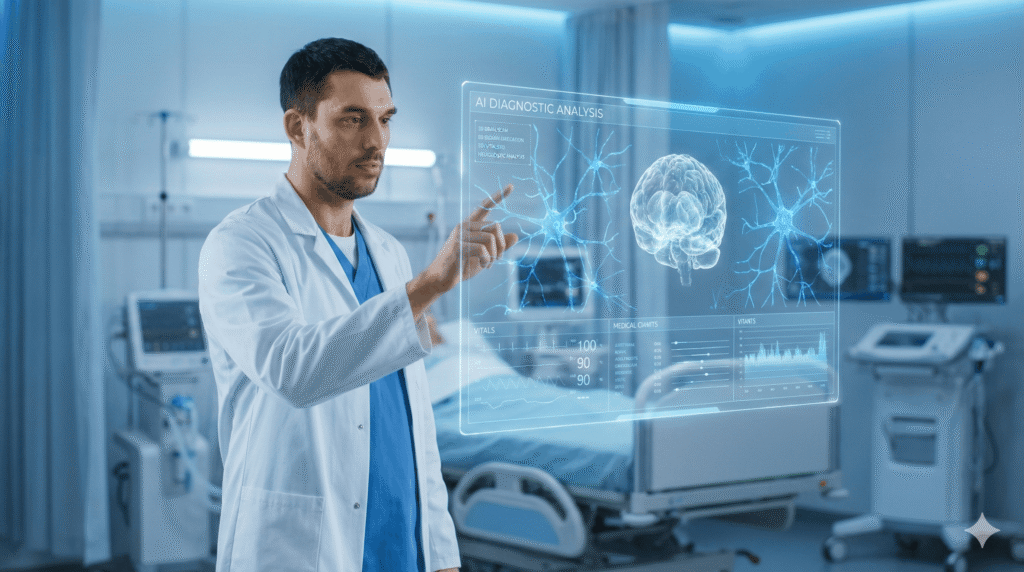
Introduction Healthcare is evolving faster than at any time in modern history, driven by increasing patient volumes, complex clinical data, and the demand for precision medicine. Artificial Intelligence (AI) has emerged as a transformative force that can interpret massive amounts of clinical information, automate routine processes, and enhance provider decision-making. One of the most powerful capabilities of healthcare AI is its ability to convert complex patient narratives—symptoms, history, images, lab results, and documentation—into actionable clinical insights. In this comprehensive guide, we explore how AI strengthens diagnostics, reduces provider workload, improves outcomes, and supports personalized care. Whether you are a clinical professional, health IT specialist, or digital health entrepreneur, understanding how AI reshapes patient care is essential for future-ready healthcare delivery. The Growing Complexity of Healthcare Data Modern healthcare generates data at unprecedented scale: Traditional healthcare systems were not built to interpret this vast, unstructured information. AI bridges that gap by providing automated data interpretation, enabling clinicians to focus more on patient interaction and less on administrative burden. =========================================== 1. AI Improves Diagnostic Accuracy =========================================== AI-driven algorithms can analyze patterns in imaging, lab results, and clinical documentation, often detecting abnormalities earlier than traditional methods. AI in Medical Imaging AI-assisted imaging tools can: Examples include: AI in Pathology and Lab Interpretation AI helps interpret: This accelerates analysis and reduces laboratory backlogs. AI for Disease Prediction Predictive AI models assess patient risk for: By modeling thousands of variables, AI helps clinicians intervene before conditions worsen. =========================================== 2. AI Reduces Medical Errors =========================================== Medical errors remain one of the leading causes of preventable harm in healthcare. AI plays a major role in reducing these through automation and decision support. Clinical Decision Support (CDS) AI-driven CDS tools: Natural Language Processing (NLP) NLP systems analyze clinical notes to: This ensures clinicians do not overlook critical information buried within EHRs. Medication Safety AI improves medication management by: This strengthens overall patient safety. =========================================== 3. AI Enables Faster and More Informed Clinical Decisions =========================================== With clinicians often required to make rapid decisions, AI provides the analytical support they need. Real-Time Monitoring and Alerts AI monitors: It generates alerts when clinical deterioration is detected, often hours before traditional scoring systems. AI for Emergency Medicine In emergency departments, AI can: Predictive Analytics for Care Coordination AI identifies patients at high risk for: Healthcare teams can intervene early, improving outcomes and lowering costs. =========================================== 4. AI Enhances Patient Engagement and Personalization =========================================== Healthcare is shifting toward individualized care. AI helps tailor treatment plans by learning from patient-specific data. Personalized Treatment Recommendations AI evaluates: This leads to highly individualized care pathways. Virtual Health Assistants AI-driven assistants help patients: Behavioral Health Support AI tools analyze mood, behavior, and voice patterns to help detect early signs of: This significantly enhances the reach of mental health care. =========================================== 5. AI Streamlines Administrative Workflows =========================================== Clinician burnout is often tied to administrative overload. AI helps reduce time spent on repetitive tasks. Automated Documentation Speech-to-text AI and NLP generate: Revenue Cycle Optimization AI improves: Operational Efficiency AI optimizes: This increases productivity across the entire hospital system. =========================================== 6. Challenges and Ethical Considerations in Healthcare AI =========================================== AI integration comes with responsibilities. Data Privacy AI must comply with: Bias and Fairness AI can inadvertently inherit bias from training datasets. Continuous monitoring and validation are essential. Clinical Validation AI systems must be: Provider Adoption Successful implementation requires: Despite challenges, the benefits far outweigh barriers when implemented responsibly. =========================================== The Future of AI in Healthcare =========================================== AI is set to become a core pillar of modern medicine. Trends include: The healthcare systems of the future will rely on AI not as a convenience, but as a clinical necessity. Conclusion Healthcare AI is transforming the patient care experience by interpreting massive datasets, improving diagnostic accuracy, reducing medical errors, and enabling faster clinical decisions. By translating complex patient stories into actionable insights, AI empowers clinicians to deliver more personalized, efficient, and evidence-based care. As AI tools continue to evolve, they will become indispensable components of the modern healthcare ecosystem—driving better outcomes, reducing costs, and improving patient satisfaction.