AI in Revenue Cycle Management: How Intelligent Automation Is Fixing What Broke Healthcare Billing

The Billing System Was Never Built to Handle This Much Complexity Healthcare billing is broken. Not slightly off — structurally, fundamentally broken in ways that have compounded quietly for decades. Talk to any RCM director who’s been in this industry longer than ten years and they’ll tell you the same thing: the workflows haven’t changed, but everything around them has gotten dramatically harder. More payer rules. More code specificity. More prior auth. More denials. And somehow, the expectation is that the same lean billing teams — often understaffed, consistently under-resourced — will absorb all of it without missing a beat. They can’t. And the numbers in 2026 make that impossible to ignore. Initial claim denials hit 11.8% in 2024, up from 10.2% just a few years earlier. The trajectory since then has only gotten steeper. In 2022, 30% of providers reported that at least 10% of their claims were denied. By 2024, that figure had grown to 38%. In 2025, 41% of providers reported denial rates exceeding 10%. That’s not a trend. That’s a slow-motion financial crisis, and it’s accelerating. Healthcare denial rates have surged to 11% of all claims, costing providers $19.7 billion annually in denial management expenses alone — and that doesn’t account for delayed revenue, staff burnout, or strategic resources diverted from growth to administrative firefighting. Meanwhile, the U.S. RCM market now totals approximately $90.6 billion and is projected to reach nearly $308 billion by 2030 — a market growing precisely because the problem it serves keeps getting bigger. Artificial intelligence isn’t a magic wand. But in revenue cycle management, it’s becoming the most consequential operational tool the industry has seen in a generation. The question isn’t whether AI belongs in your billing workflow anymore. That debate is over. The question now is how far behind you’re willing to fall before you act. What Does “AI in RCM” Actually Mean? Let’s be precise — because the term gets abused constantly. Every software company slaps “AI-powered” on their dashboard and calls it innovation. So before anything else, let’s define what’s actually happening. Real AI in revenue cycle management means deploying machine learning, natural language processing, robotic process automation, and predictive analytics across the entire financial and administrative workflow — from patient scheduling all the way through final payment posting. It’s not a single tool. It’s a stack of intelligent systems operating simultaneously across multiple touchpoints. A machine learning model that scores denial risk before a claim leaves your system. An NLP engine that reads physician notes and suggests ICD-10 and CPT codes with documented rationale. An RPA bot that verifies insurance eligibility overnight without anyone asking it to. A predictive analytics layer that surfaces underpayments your team would never catch manually at scale. As of 2026, this is no longer theoretical. 63% of healthcare organizations have already integrated AI-powered automation into their revenue cycle workflows, and 80% of health systems report actively exploring, piloting, or implementing generative AI tools for RCM — a 38-percentage-point increase in under two years. The market is moving. The question for every practice and health system is whether they’re moving with it. Where Traditional RCM Falls Apart Here’s something the industry still doesn’t say loudly enough: traditional revenue cycle management was never designed for the environment it currently operates in. It was engineered for a simpler era — fewer payers, simpler code sets, far less compliance overhead. The fragility was baked in from the start. Clinical documentation happens at the point of care. Coders interpret that documentation — often days later, sometimes with incomplete context. Billers translate codes into claims. Payers process or reject. Every single handoff is a risk point, and the volume of those handoffs has grown dramatically over the past decade. Experian Health’s 2025 State of Claims data shows that 26% of practices trace at least one in 10 denials back to intake errors: wrong policy numbers, outdated insurance cards, and missed eligibility rechecks. These aren’t complex clinical disputes. They’re administrative failures happening at the front door, before the patient has even sat down. Then there’s prior authorization. A 2022 AMA survey found that physicians and staff spend an average of nearly 13 hours per week managing prior authorizations — time spent navigating payer-specific portals, compiling clinical documentation, and following up on pending requests for services that, in many cases, could have been flagged and resolved before the appointment was scheduled. And the financial consequences compound relentlessly. An HFMA Pulse Survey shows hospitals lose an average of 4.8% of net revenue to denials. Meanwhile, HFMA reports that up to 65% of denied claims are never reworked — meaning a significant share of that lost revenue gets written off without a fight. Not appealed. Not corrected. Just gone. One in three hospitals now reports bad debt levels exceeding $10 million — a number that reflects years of accumulated leakage from a system that was never built to catch it. Key Areas Where AI Is Making a Measurable Difference 1. Stopping Denials Before They Happen This is where AI delivers its fastest, clearest ROI. Old-school claims scrubbing worked from static rule sets — if a claim has modifier 59 without a supporting diagnosis, flag it. Useful, but it only catches what you already know to look for. It doesn’t learn. It doesn’t adapt. And payer rules change constantly. AI-powered denial prevention learns from your historical submission data, identifies patterns in what your specific payers reject, and scores incoming claims against those patterns before they ever leave your system. The technology doesn’t just catch today’s errors — it anticipates tomorrow’s. The results are significant. Practices implementing AI-supported eligibility verification have reported cutting denial rates by as much as 42%, according to Experian Health case data. At the system level, Deloitte’s Center for Health Solutions found that automated claim-scrubbing and predictive validation can prevent up to 85% of avoidable denials, reducing administrative cost per claim by nearly one quarter. That 85% figure deserves a real pause. Most organizations have spent years accepting double-digit
ICD-10 Codes for Cardiology: Complete Guide for Accurate Coding, Clinical Documentation, and Reimbursement in 2026

The 2026 ICD-10-CM code set, which goes into effect on October 1, 2025, is the biggest change to cardiovascular diagnosis coding in years. CMS has put out updates that have a direct effect on how cardiology practices get paid, how they adjust for risk, and how they report quality. These changes need to be looked at right away by coding teams, CDI experts, and cardiologists because they add 487 new codes and make heart failure, acute myocardial infarction, and cardiorenal syndromes much more specific. This full guide has everything you need to understand the 2026 updates, stay ready for audits, protect the integrity of your revenue, and get the most money back from all payer models. This challenge intensifies in 2026 as CPT and ICD-10 updates fundamentally change how cardiology practices document, bill, and justify medical necessity. CPT and ICD-10 must now be seamlessly linked in every Medicare or commercial claim, forming the foundation of compliant cardiology revenue cycles. Cardiology generates a huge volume of claims and payer scrutiny because it’s the leading cause of death in the US. The ICD-10-CM code set gives cardiology practices specificity tools, but only if clinical documentation supports the required detail. Every cardiology coder must know the new and revised cardiovascular codes from the FY 2026 ICD-10-CM updates, effective October 1, 2025. Let’s start with the basics before diving in. Understanding the ICD-10-CM Structure for Cardiology Chapter 9: Diseases of the Circulatory System (I00–I99) is where most cardiology codes can be found. But cardiology coders commonly look at other chapters as well, such as: It’s very important to understand how these chapters depend on each other. When a patient has diabetic cardiomyopathy, you don’t just use one code. You use E11.-, I43, and maybe Z codes to make a complete picture of the patient’s condition that explains the level of care that was billed. ICD-10 Codes for Ischemic Heart Disease (CAD and AMI) Ischemic heart disease is the bread and butter of most cardiology practices, and it’s also where I see the most significant coding errors — largely driven by incomplete documentation. Coronary Artery Disease (CAD) Coronary artery disease codes are in the I25.- category, and coders need to say: ICD-10 Code Description I25.10 Atherosclerotic heart disease of native coronary artery without angina pectoris I25.110 Atherosclerotic heart disease of native coronary artery with unstable angina pectoris I25.111 Atherosclerotic heart disease of native coronary artery with angina pectoris with documented spasm I25.118 Atherosclerotic heart disease of native coronary artery with other forms of angina pectoris I25.119 Atherosclerotic heart disease of native coronary artery with unspecified angina pectoris I25.700 Atherosclerosis of coronary artery bypass graft(s), unspecified, without angina pectoris I25.750 Atherosclerosis of native coronary artery of transplanted heart without angina Documentation tip: Physicians must specify angina type and presence in their notes. A note that reads “CAD” without further detail forces the coder to use I25.10, a non-specific code that often triggers medical necessity reviews for high-value cardiac procedures. Acute Myocardial Infarction (AMI) ICD-10-CM AMI coding requires specificity at three levels: STEMI vs. NSTEMI, coronary artery, and episode of care. STEMI Codes (I21.0–I21.3): ICD-10 Code Description I21.01 ST elevation MI involving left main coronary artery I21.02 ST elevation MI involving left anterior descending coronary artery I21.09 ST elevation MI involving other coronary artery of anterior wall I21.11 ST elevation MI involving right coronary artery I21.19 ST elevation MI involving other coronary artery of inferior wall I21.21 ST elevation MI involving left circumflex coronary artery I21.29 ST elevation MI involving other sites I21.3 ST elevation MI of unspecified site NSTEMI Code: ICD-10 Code Description I21.4 Non-ST elevation (NSTEMI) myocardial infarction Subsequent AMI (I22.-): If a patient has a new AMI within 28 days of a previous AMI, they fall into the I22.- category, not the I21.- category. This difference is very important for risk adjustment and payment. Write down the time frame clearly. Old MI: ICD-10 Code Description I25.2 Old myocardial infarction (healed MI, > 28 days old, no current symptoms) Heart Failure Coding: Where Documentation Drives Everything Heart failure is probably the condition in cardiology that needs the most documentation. I’ve seen auditors take back a lot of money because the doctor wrote “CHF” but didn’t say what type or how bad it was. That lack of detail in ICD-10-CM costs a lot of money. The Heart Failure Code Matrix Heart failure codes require documentation of: ICD-10 Code Description I50.1 Left ventricular failure, unspecified I50.20 Unspecified systolic (congestive) heart failure I50.21 Acute systolic (congestive) heart failure I50.22 Chronic systolic (congestive) heart failure I50.23 Acute on chronic systolic (congestive) heart failure I50.30 Unspecified diastolic (congestive) heart failure I50.31 Acute diastolic (congestive) heart failure I50.32 Chronic diastolic (congestive) heart failure I50.33 Acute on chronic diastolic (congestive) heart failure I50.40 Unspecified combined systolic and diastolic heart failure I50.41 Acute combined systolic and diastolic heart failure I50.42 Chronic combined systolic and diastolic heart failure I50.43 Acute on chronic combined systolic and diastolic heart failure I50.810 Right heart failure, unspecified I50.811 Acute right heart failure I50.812 Chronic right heart failure I50.813 Acute on chronic right heart failure I50.814 Right heart failure due to left heart failure I50.82 Biventricular heart failure I50.83 High output heart failure I50.84 End stage heart failure I50.89 Other heart failure I50.9 Heart failure, unspecified Hypertensive Heart Disease with Heart Failure ICD-10-CM assumes that there is a link between high blood pressure and heart failure when a patient has both. You must code it as hypertensive heart disease with heart failure. As the main code, use I11.0 (Hypertensive heart disease with heart failure). Then, as an extra code, use the specific heart failure code from I50.-. This is one of the most common relationships that I see coded wrong in cardiology billing. If coders list I10 (Essential hypertension) and I50.22 (Chronic systolic heart failure) separately, they are taking a risk with compliance because the Official medical coding Guidelines say to put them together under the hypertensive heart disease category. Arrhythmia and Conduction Disorder Codes Arrhythmias are coded
WHAT IS Clinical Laboratory Improvement Amendments (CLIA) in Medical Billing? A Healthcare IT & Compliance Perspective

Introduction In today’s healthcare ecosystem, laboratory information systems (LIS), electronic health records (EHRs), and reimbursement workflows are tightly interconnected. Among the most important regulatory frameworks governing laboratory data and test billing is the Clinical Laboratory Improvement Amendments (CLIA). While CLIA is commonly discussed from a compliance and medical billing standpoint, it is equally critical from a healthcare IT perspective — influencing data structure, interoperability, laboratory workflow automation, and how test results integrate into broader clinical systems. This article explains CLIA through the lens of healthcare IT. We cover what CLIA is, how certification works, why it matters to EHRs and medical billing software, and the IT safeguards required for compliant lab data exchange across healthcare platforms. =========================================== 1. What Is CLIA and Why Does It Matter in Healthcare IT? =========================================== CLIA establishes federal standards for all U.S. laboratories performing human diagnostic testing. While most think of CLIA as governance for laboratory personnel and test procedures, healthcare IT plays a crucial role in: In short, CLIA is both a compliance framework and a critical IT requirement for accurate and secure lab reporting. =========================================== 2. The Three Levels of Test Complexity and Their IT Implications =========================================== Each CLIA certificate corresponds to a level of allowable test complexity: 1. Certificate of Waiver (Waived Tests) Covers simple point-of-care tests (POCT) such as: IT Relevance 2. Moderate Complexity Certificate Allows more advanced analytical equipment, such as automated analyzers. IT Relevance 3. High Complexity Certificate Covers molecular genetics, microbiology, and other advanced diagnostics. IT Relevance Healthcare IT must dynamically enforce these rules to prevent billing errors and maintain compliance. =========================================== 3. Where CLIA Intersects With Medical Billing Technology =========================================== CLIA influences multiple parts of the healthcare IT ecosystem: 1. EHR to Billing System Data Flow When a test is ordered or resulted: 2. Automated Claim Scrubbing Modern billing platforms use rule engines that: This reduces denials dramatically. 3. Clearinghouse Requirements Clearinghouses validate: Healthcare IT must ensure clean data transmission to avoid claim rejections. 4. Integration With Laboratory Information Systems (LIS) LIS platforms coordinate: Incorrect CLIA classification in LIS can propagate errors across the entire system. =========================================== 4. Why CLIA Matters for IT Security & Auditability =========================================== Healthcare IT teams must ensure that their systems support CLIA audit preparedness. 1. Access Control Management Only authorized lab personnel should: Role-based access is required for CLIA compliance. 2. Data Integrity and Result Validation Systems must prevent: Audit logs must record every action. 3. Secure Transmission of Results HL7 messages containing lab data must be encrypted to protect PHI. 4. Compliance Documentation Availability Systems must store: These must be accessible during CLIA inspections. =========================================== 5. Healthcare IT Best Practices for CLIA Compliance =========================================== 1. Maintain Up-to-Date CLIA Numbers Across All Systems EHR, LIS, and billing software must sync the correct CLIA number for each testing location. 2. Automate QW Modifier Application Billing rules engines should insert QW on waived tests automatically. 3. Use LOINC and SNOMED for Lab Result Coding This ensures interoperability and reduces payer rejections. 4. Implement Multi-Level Validation for Test Orders Systems should prevent: 5. Monitor CLIA Expiration Dates Healthcare IT should establish automated reminders for certificate renewals. 6. Protect Data Through Encryption & Access Controls Proper cybersecurity safeguards are required for CLIA and HIPAA compliance. =========================================== 6. Common CLIA-Related IT Mistakes =========================================== 1. Using the Wrong CLIA Number When Multiple Sites Exist Each location has a unique certificate — mismatches are common and costly. 2. Failing to Update Systems After Certificate Renewal Outdated certificates cause rejections. 3. Missing Modifier QW in Automated Billing A top reason for payer denials. 4. LIS and EHR Not Aligned on Test Complexity Level Results may appear valid clinically but fail technically. 5. Sending Claims Before Lab Results Are Finalized Incomplete data violates CLIA and payer rules. =========================================== 7. How Healthcare IT Will Evolve With Future CLIA Requirements =========================================== Upcoming trends include: Healthcare IT will become even more central to CLIA compliance and laboratory billing accuracy. Conclusion CLIA plays a vital role in ensuring high-quality laboratory testing and accurate reimbursement. While traditionally viewed as a compliance or laboratory operations requirement, CLIA deeply affects healthcare IT systems, influencing how lab data is stored, transmitted, validated, coded, and billed. From automated modifier management to encrypted HL7 messaging and claim scrubbers that enforce test complexity rules, healthcare IT teams must ensure that their systems fully support CLIA compliance. Understanding CLIA from both a regulatory and IT perspective protects organizations from billing denials, audit findings, and workflow disruptions—ultimately supporting safer, more reliable patient care.
Top 5 Common AdvancedMD Login Issues and Their Solutions: A Complete Troubleshooting Guide for 2025

Introduction AdvancedMD is one of the most widely used cloud-based practice management and electronic health record (EHR) platforms in the United States. It supports medical billing, scheduling, telemedicine, patient portals, and clinical documentation. Because of its central role in daily operations, any login issue—no matter how small—can disrupt workflows, delay patient care, and interrupt billing activities. This comprehensive troubleshooting guide explores the five most common AdvancedMD login issues, why they occur, and how to resolve them efficiently. Whether you are a provider, medical biller, administrator, or IT support staff member, this step-by-step resource will help you diagnose and fix login problems quickly, ensuring your practice stays productive and compliant. =========================================== 1. Incorrect Username or Password Errors =========================================== This is the most common issue users encounter when attempting to log in. AdvancedMD uses strict authentication rules to protect patient information, meaning even a small mistake can trigger an error. Causes Solutions 1. Verify Case Sensitivity Passwords in AdvancedMD are case-sensitive. Ensure that: 2. Use the “Forgot Password” Feature Resetting the password often resolves the issue immediately.Admin users may need to unlock accounts manually. 3. Check Password Expiration AdvancedMD requires periodic password updates for HIPAA compliance. 4. Contact the System Administrator Admins can: Prevention Tips =========================================== 2. Two-Factor Authentication (2FA) Failures =========================================== Two-factor authentication is required for all AdvancedMD users for enhanced security. However, 2FA issues commonly prevent successful login. Causes Solutions 1. Confirm Code Accuracy Codes expire quickly—enter them within the valid window. 2. Check Device Time Sync Authenticator apps require correct system time.Enable automatic time settings on your device. 3. Resend Verification Code If SMS/email delays occur, click “Resend Code.” 4. Use Backup Authentication Methods If your device is unavailable, admins may: Prevention Tips =========================================== 3. Browser Compatibility and Cache Issues =========================================== AdvancedMD is cloud-based and works best in modern, updated browsers. Browser-related issues can mimic login failures. Causes Solutions 1. Use a Supported Browser Best options include: Avoid Internet Explorer, which AdvancedMD no longer supports. 2. Clear Cache and Cookies Old cache data can block login attempts.Clear your browser’s: 3. Disable Browser Extensions Extensions like ad-blockers or script blockers may interfere. 4. Open in Incognito Mode Incognito mode disables most extensions and cached files. Prevention Tips =========================================== 4. Network and Connectivity Problems =========================================== Since AdvancedMD is cloud-hosted, stable internet access is essential. Causes Solutions 1. Check Internet Speed Minimum recommended speed: 2. Restart Router or Switch Networks Sometimes a simple network refresh resolves the problem. 3. Disable VPN Temporarily VPNs may route traffic through restricted geographical zones. 4. Contact IT Support to Whitelist URLs AdvancedMD requires specific domains to be accessible. Prevention Tips =========================================== 5. AdvancedMD Server or System-Wide Outages =========================================== Although infrequent, outages can occur due to maintenance, updates, or unexpected disruptions. Causes Solutions 1. Check AdvancedMD System Status Page This page often lists: 2. Contact Support AdvancedMD support can confirm: 3. Avoid Multiple Login Attempts Repeated attempts may trigger temporary security blocks. Prevention Tips =========================================== Bonus: Administrator-Level Solutions =========================================== For IT administrators, resolving login issues may require: 1. Reviewing User Access Levels Inactive or suspended accounts cannot authenticate. 2. Checking Security Policies Password expiration frequency and 2FA enforcement may block access. 3. Confirming Network Whitelisting Ensure allowed URLs include: 4. Monitoring User Logs Identify repeated failed logins or suspicious activity. =========================================== Why These Issues Occur in Healthcare IT Environments =========================================== Healthcare systems must comply with strict regulations like HIPAA.This means: While these safeguards prevent breaches, they often complicate user access. =========================================== Conclusion AdvancedMD is a powerful healthcare IT system, but login issues can disrupt essential workflows across clinical, administrative, and billing departments. By understanding the five most common login problems—credential errors, 2FA issues, browser problems, network restrictions, and system outages—organizations can quickly restore access and maintain productivity. Proactive IT management, staff training, and system monitoring ensure that users experience fewer disruptions and better overall platform performance. This troubleshooting guide empowers users and IT leaders to keep AdvancedMD running smoothly, protect patient data, and support uninterrupted healthcare delivery.
Mental Health CPT Codes 2025 Explained: Accurate Billing, Compliance, Documentation, and Reimbursement Optimization

Mental Health CPT Codes 2026: Billing, Compliance & Reimbursement DR. CONTENT V4 — Medical Billing & Coding CY 2026 Medicare Physician Fee Schedule AMA CPT® 2026 Professional Edition 🔥 BREAKOUT TREND · V4 BILLING & CODING · UPDATED MAY 2026 Mental Health CPT Codes 2026 Explained: Accurate Billing, Compliance, Documentation & Reimbursement Optimization 📅 Updated: May 2026 🕐 22 min read 📝 ~4,800 words ✅ Quality Score: 11/11 Behavioral health has the highest claim denial rate in all of healthcare — 15–25%, more than double the 5–10% average for medical/surgical specialties (Elite Med Financials, 2026). The gap between what you earn and what you collect almost always traces back to the same three failure points: wrong code, wrong modifier, wrong documentation. This guide closes all three. SEO TITLEMental Health CPT Codes 2026: Billing, Compliance & Reimbursement PRIMARY KWmental health CPT codes 2026 VERTICALV4 — Medical Billing & Coding TREND STATUS🔥 Breakout FEE SCHEDULECY 2026 Medicare PFS CODE SOURCEAMA CPT® 2026 + CMS Article A57480 Why Mental Health Billing Is the Hardest Specialty to Get Right Picture this: a licensed clinical social worker sees 25 clients a week, documents every session meticulously, and submits clean claims — yet ends the quarter with a 19% denial rate and $38,000 in unrecovered revenue. The problem isn’t clinical quality. It’s one misapplied modifier on 90837, a POS code set to 02 instead of 10, and a handful of notes that say “psychotherapy provided” instead of naming the specific intervention. That’s the structural reality of mental health billing in 2026. Behavioral health claims face initial denial rates 50–85% higher than comparable medical claims (Elite Med Financials, 2026), not because providers deliver substandard care, but because payers have deployed machine-learning adjudication systems that flag documentation patterns at a granularity most practices never anticipate. The 2026 Medicare Physician Fee Schedule brought important changes: the conversion factor rose from $32.35 in 2025 to $33.59 for MIPS/APM participants — the first meaningful recovery after the ~14% cuts of 2025. Psychotherapy codes saw 2–4% net increases. New telehealth POS rules are fully enforced. The February 16, 2026 deadline for updated 42 CFR Part 2 regulations is now live. And LMFTs and LMHCs are in their third year as independent Medicare providers. This guide covers every current mental health CPT code with verified 2026 Medicare rates, the modifier rules that protect or forfeit your reimbursement, the ICD-10 diagnosis codes that establish medical necessity, and the documentation checklist that survives a RAC audit. 📋 KEY FACT 23% of U.S. adults — approximately 1 in 5 — live with a diagnosable mental illness (CDC, 2024). The administrative system that pays for their care is failing at a 15–25% claim denial rate. Fixing your billing process is a direct patient access issue, not just a revenue problem. Complete Mental Health CPT Code Reference: 2026 Medicare Rates All codes below are cross-verified against the CY 2026 Medicare Physician Fee Schedule, CMS Article A57480, and the AMA CPT® 2026 Professional Edition. Rates reflect national non-facility averages; your MAC locality may pay 7–15% higher in high-cost regions (NYC, SF, Boston). Psychiatric Diagnostic Evaluation Codes TABLE 1 — Psychiatric Evaluation CPT Codes | Source: CMS CY 2026 Physician Fee Schedule CPT Code Description Time Who Bills Medicare Rate (2026) Audit Risk 90791 Psychiatric diagnostic evaluation (no medical services) 45–90 min All MH providers ~$202 (psychologist)~$172 (NP, 85%) MODERATE 90792 Psychiatric diagnostic evaluation with medical services (med review, Rx, exam) 45–90 min MD, DO, PMHNP only ~$229 MODERATE 💡 PRO TIP — 90791 vs 90792 90792 pays ~$27 more than 90791 — but it requires documented medication review, prescribing rationale, or a physical assessment component. If a PMHNP bills 90792 without medication management documentation, that’s an upcoding flag. Only bill 90792 when the note explicitly addresses medical services. Individual Psychotherapy Codes — The Time-Based Minefield TABLE 2 — Individual Psychotherapy CPT Codes 2026 | Source: CMS CY 2026 PFS + AMA CPT® 2026 CPT Code Time Range Face-to-Face Min Required Medicare Rate 2026 (Non-Facility) Commercial Range Key Rule 90832 16–37 min ≥16 min ~$78 $65–$115 Rarely billed standalone; usually add-on 90834 38–52 min ≥38 min ~$131 $110–$180 Most commonly billed MH CPT code nationally 90837 53+ min ≥53 min ~$157 (psychologist)~$116 (LMFT/LMHC) $140–$210 52 min = 90834. 53 min = 90837. No exceptions. ⚠️ THE MIDPOINT RULE — HIGH AUDIT RISK The midpoint between 90834 (max 52 min) and 90837 falls at 52.5 minutes — which rounds up to 53 minutes minimum for 90837. A single 52-minute session billed as 90837 is upcoding under CMS guidelines. Do it consistently and a RAC audit will recover payments with interest over a 6-year lookback period. Your documentation must show exact start and stop times. “Approximately 60 minutes” will not survive a payer audit. Add-On Psychotherapy Codes (Psychiatry Combined Visits) When a psychiatrist or PMHNP delivers both medication management and psychotherapy in the same visit, you never bill a standalone therapy code. You bill an E/M code for the medical service plus an add-on psychotherapy code for the therapy portion. Billing a standalone 90837 for a combined visit is one of the most common — and costly — compliance errors in psychiatric billing. TABLE 3 — Add-On Psychotherapy Codes (Combined E/M + Therapy) | Source: AMA CPT® 2026 Add-On Code Paired With Therapy Time Medicare Rate 2026 Required Modifier 90833 E/M codes 99202–99215 16–37 min psychotherapy ~$63 -25 on the E/M code 90836 E/M codes 99202–99215 38–52 min psychotherapy ~$98 -25 on the E/M code 90838 E/M codes 99202–99215 53+ min psychotherapy ~$126 -25 on the E/M code Group and Family Therapy Codes TABLE 4 — Group & Family Therapy CPT Codes | Source: CMS CY 2026 PFS CPT Code Description Patient Present? Medicare Rate 2026 Group Size Note 90846 Family psychotherapy without the patient No ~$107 Bill per family unit, not per person 90847 Family psychotherapy with the patient present Yes ~$124 Bill per family unit, not per person 90853 Group psychotherapy (non-multiple-family) Yes ~$35 per patient Bill once per
What Is CLIA in Medical Billing? Complete Guide to CLIA Compliance, Coding, Laboratory Rules, and Reimbursement

Introduction Laboratory testing is an essential part of modern healthcare, supporting diagnosis, treatment decisions, and long-term disease management. Because of its critical role, laboratory testing is regulated at a federal level in the United States under a program known as CLIA—the Clinical Laboratory Improvement Amendments. For medical billing professionals, CLIA impacts how laboratory services are billed, what codes require CLIA certification, which labs may perform certain tests, and how CMS evaluates lab-based claims for reimbursement. Incorrect CLIA numbers, wrong test classifications, or billing tests that exceed a lab’s authorized complexity level can lead to claim denials, compliance violations, or even federal penalties. This comprehensive guide explains CLIA regulations, certification levels, billing rules, and how to ensure audit-ready compliance. =========================================== 1. What Is CLIA? =========================================== The Clinical Laboratory Improvement Amendments (CLIA) were enacted in 1988 to establish quality standards for all laboratory testing performed on human specimens in the United States. The purpose of CLIA is to ensure: CLIA applies to all laboratories, including: If a facility performs testing on human specimens for diagnosis, prevention, or treatment, CLIA certification is mandatory. =========================================== 2. Types of CLIA Certificates =========================================== CLIA certification is not one-size-fits-all. It is based on the complexity of testing performed. There are three levels of test complexity: 1. Waived Tests These are simple, low-risk tests such as: Certificate Required:Certificate of Waiver (COW) Waived tests are the lowest regulatory burden, but laboratories must still follow CLIA rules. 2. Moderate Complexity Tests Includes tests requiring more equipment and training, such as: Certificate Required:Certificate for Compliance (CoC) ORCertificate of Accreditation (CoA) 3. High Complexity Tests These tests require skilled laboratory personnel and sophisticated equipment: Certificate Required:Certificate for Compliance (CoC) ORCertificate of Accreditation (CoA) Why Complexity Matters for Billing A facility may only bill for tests authorized by its CLIA certificate.Billing a high-complexity code under a waiver certificate will cause automatic denial. =========================================== 3. CLIA Numbers in Medical Billing =========================================== CMS requires labs to include their CLIA number on all claims for laboratory services.The CLIA number: Where Is the CLIA Number Entered? On CMS-1500 claims, the CLIA number is entered in: On electronic claims: Missing, incorrect, or expired CLIA numbers will result in denial. =========================================== 4. CLIA-Waived Tests and Modifier QW =========================================== Many laboratory CPT codes require modifier QW when performed by a CLIA-waived laboratory. Modifier QW = CLIA-Waived Test Example Codes Commonly Requiring QW Not all labs need QW—ONLY waived labs must include it on relevant CPT codes. Claim Denial Example A claim for CPT 87811 (COVID rapid test) is submitted without modifier QW from a waived lab.CMS automatically denies the claim because it must be billed as: 87811-QW =========================================== 5. CLIA and COVID-19 Testing =========================================== During the COVID-19 public health emergency, CLIA rules expanded to allow more widespread testing.Today, most COVID testing still falls under: Billing requirements depend on: Incorrect pairing of CLIA level and test complexity results in claim denials. =========================================== 6. Billing Rules for CLIA Compliance =========================================== Healthcare organizations must follow strict billing rules to avoid compliance issues. Rule 1: The CLIA Certificate Must Match the Test Complexity A waived certificate cannot bill tests requiring moderate or high complexity. Rule 2: The CLIA Number Must Match the Physical Testing Location If a provider sends specimens to a reference lab, the reference lab bills for the test—not the ordering provider. Rule 3: CLIA-Waived Codes Must Include the QW Modifier Unless CMS lists the code as exempt. Rule 4: Use Correct Diagnosis Codes Payers require medically necessary ICD-10 codes aligned with the ordered test. Rule 5: CLIA Certificate Expiration Date Matters Claims submitted under expired certificates are denied. Rule 6: Documentation Must Support Medical Necessity Including: =========================================== 7. Common CLIA Billing Errors =========================================== 1. Billing High-Complexity Tests Under a Waiver Certificate Automatic denial and potential compliance violations. 2. Missing QW Modifier One of the top reasons CMS denies lab claims. 3. Using the Wrong CLIA Number Especially common when testing is performed across multiple sites. 4. Billing Without Documentation of the Test No test = no reimbursement. 5. Not Updating the CLIA Certificate After Relocation CLIA certificates are address-specific. 6. Billing for Tests the Lab Did Not Perform This may lead to: =========================================== 8. Best Practices for CLIA-Compliant Medical Billing =========================================== 1. Maintain an Updated CLIA Certificate File Keep digital and physical copies accessible to billing teams. 2. Build Automated Edits Into Your Billing System Flag: 3. Train Staff on CLIA Requirements Both clinical and billing staff should understand complexity levels. 4. Audit Laboratory Claims Regularly Especially tests: 5. Collaborate With Laboratory Leaders Billing, compliance, and lab management should share updates regularly. =========================================== 9. Why CLIA Compliance Matters =========================================== CLIA ensures: Non-compliance may result in: In severe cases, loss of CLIA certification can shut down an entire laboratory operation. Conclusion CLIA is a critical pillar of laboratory quality, safety, and compliance within the medical billing ecosystem. From certificate levels and test complexity to modifiers, documentation, and claim submission rules, medical billing teams must understand how CLIA impacts every laboratory service they bill. Proper CLIA compliance leads to cleaner claims, fewer denials, and greater confidence during payer audits. As laboratory testing continues to expand—especially with molecular diagnostics and digital health integration—CLIA will remain central to accurate and compliant medical billing.
Modifiers in Medical Billing: A Comprehensive Guide to Usage, Rules, Compliance, and Audit-Ready Documentation

Introduction In medical billing, accuracy is everything. Even when a provider delivers a perfectly valid service, claims may still be denied if documentation and coding fail to communicate the full story. One of the most essential tools for clarifying services is the CPT and HCPCS modifier—a two-character code that provides additional information about how, why, where, or by whom a service was performed. Modifiers play a central role in telling payers what made this service unique. However, modifiers are also one of the top sources of billing errors, compliance violations, and payer denials. Misuse of modifiers such as 25, 59, 76, 77, 95, and others can trigger audits and refund requests, particularly when insufficient documentation exists. This comprehensive guide explains the purpose of modifiers, how they should be applied, the rules governing their use, and best practices to ensure compliance and clean claim submission. =========================================== 1. What Are Modifiers and Why Do They Matter? =========================================== Modifiers supply additional detail about a service without changing the core meaning of the CPT or HCPCS code. They answer questions like: Key Reasons Modifiers Are Essential Without modifiers, payers cannot evaluate the context of medical services correctly. =========================================== 2. The Most Commonly Used Modifiers in Medical Billing =========================================== Below are the most important modifiers used across specialties. Modifier 25 — Significant, Separately Identifiable E/M Service This modifier is used when a provider performs: Example A patient visits for a knee injection but also presents with new symptoms of chest pain requiring additional evaluation. Rules for Modifier 25 Modifier 25 is frequently audited, making clear documentation essential. Modifier 59 — Distinct Procedural Service Used to show that procedures normally bundled together were: Important Note Modifier 59 should be used sparingly. CMS prefers more specific X modifiers (XE, XS, XP, XU), although not all payers accept them. Red Flags for Auditors Modifiers 76 & 77 — Repeat Procedures Modifier 76: Repeat procedure by the same provider. Modifier 77: Repeat procedure by a different provider. Common Use Cases Documentation must clearly state: Modifier 95 — Synchronous Telemedicine Service Modifier 95 indicates: Documentation Must Include As telehealth grows, modifier 95 is now a core part of compliant billing. Other High-Value Modifiers Each modifier represents a specific circumstance requiring supporting documentation. =========================================== 3. Compliance Rules for Modifier Usage =========================================== Modifiers are powerful, but misuse can lead to audits, clawbacks, and accusations of upcoding. Compliance begins with understanding the governing laws. 1. National Correct Coding Initiative (NCCI) Bundling Rules NCCI edits specify which codes: Before adding a modifier like 59, coders must check whether NCCI allows it. 2. Medicare and Commercial Payer Rules Each payer may have: Providers must review payer policies regularly. 3. Global Surgical Packages Modifiers such as 24, 25, 57, and 79 help communicate services outside the global period. Examples Using these incorrectly can result in denials and audits. 4. Medical Necessity No modifier can override the requirement for medical necessity.If documentation does not justify the service, a modifier will not save the claim. =========================================== 4. Documentation Requirements for Audit-Proof Modifier Use =========================================== Payers frequently request records for claims with modifiers because they represent exceptions. Therefore, documentation must reflect: 1. Clear Clinical Rationale Explain: Vague notes lead to denials. 2. Separate Documentation When Required For modifier 25, separate E/M documentation should exist in the note. 3. Detail the Nature of Telehealth (Modifier 95) Include: 4. Describe Anatomical Location For modifier 59 or XS: 5. Use Time and Complexity Indicators Modifiers like 22 (increased procedural services) require detailed justification of: =========================================== 5. Common Modifier Misuse Errors =========================================== Even experienced coders make mistakes. Some of the most frequent include: 1. Overusing Modifier 25 Payers frequently audit this modifier due to excessive or unsupported usage. 2. Applying Modifier 59 Instead of More Specific X Modifiers CMS requires XE, XS, XP, XU when applicable.Coders must understand these distinctions. 3. Using Modifier 50 Incorrectly for Bilateral Procedures Some CPT codes already imply bilateral performance and do not need modifier 50. 4. Appending Modifier 22 Without Thorough Documentation Modifier 22 requires very clear justification of extra work. 5. Incorrectly Using Modifier 95 During Hybrid Visits If video was not used, modifier 95 is inappropriate. =========================================== 6. Best Practices for Clean Claims and Compliance =========================================== 1. Train Providers and Frontline Staff Many modifier errors arise from poor provider documentation. 2. Build Automated Claims Scrubbing Tools AI-driven scrubbing tools can: 3. Conduct Regular Internal Audits Review: 4. Maintain Real-Time Access to Payer Policies Payers update rules frequently. 5. Provide Modifier Cheat Sheets and Decision Trees This is especially useful for busy clinics and multi-specialty groups. =========================================== 7. The Financial Impact of Modifier Accuracy =========================================== Correct modifier use: Incorrect modifier use can cost organizations thousands or even millions annually. Conclusion Modifiers are essential tools for accurately capturing the complexity of healthcare services. When used correctly, they enhance claim clarity and ensure proper reimbursement. However, misuse can trigger costly denials, payer audits, and compliance risks. By understanding the rules, documenting effectively, and using automated checks, healthcare organizations can maintain clean claims and uphold regulatory standards. As healthcare continues to evolve, accurate modifier usage becomes even more critical in delivering both financial sustainability and high-quality patient care.
How Healthcare Startups Leverage App Development to Build Future-Ready Telemedicine, Wellness, and Clinical Data Tools

Introduction The healthcare industry is experiencing a wave of digital innovation fueled by startups that are redefining how care is delivered, monitored, and understood. With patients expecting convenience, providers seeking efficient workflows, and regulators emphasizing value-based care, healthcare startups are turning to app development to create platforms that meet modern demands. From telemedicine applications and wellness solutions to AI-powered clinical data tools, startups are using advanced technology to solve some of healthcare’s most persistent challenges. This comprehensive article explores how startups leverage app development to build scalable telehealth ecosystems, personalized wellness experiences, and robust clinical data platforms. By understanding development strategies, integration requirements, and emerging trends, healthcare organizations can better align with the digital future. =========================================== 1. The Rise of Digital Health Startups =========================================== Healthcare startups play a crucial role in modern care delivery, driven by: These factors enable startups to innovate faster than large enterprises, creating patient-centered tools that reshape the healthcare ecosystem. =========================================== 2. Telemedicine App Development: The Foundation of Modern Digital Care =========================================== Telemedicine is no longer optional—it’s a core component of healthcare delivery. Startups are using app development to build telemedicine platforms that meet clinical, regulatory, and workflow demands. 1. Secure Video Consultation Platforms Key features include: Startups focus heavily on user experience, ensuring patients and clinicians can connect without technical barriers. 2. Appointment Scheduling and Virtual Triage AI-powered triage systems evaluate symptoms and direct patients to: This reduces unnecessary visits and improves care flow. 3. Integration With EHR Systems Telehealth apps must sync with: Startups use APIs and HL7/FHIR protocols to enable seamless data exchange. 4. Remote Patient Monitoring (RPM) Telemedicine platforms often incorporate RPM tools that track: Data science models generate risk alerts and long-term insights for clinicians. =========================================== 3. Wellness App Development: Empowering Patients Beyond the Clinic =========================================== Healthcare startups recognize that wellness plays a crucial role in long-term health. Apps in this category focus on prevention, lifestyle improvement, and mental well-being. 1. Personalized Wellness Plans AI-driven personalization includes: These programs adapt as the user’s behavior and health data evolve. 2. Integration With Wearables Startups integrate with devices like: Wearable data enhances accuracy in: This creates a complete picture of patient health. 3. Mental Wellness and Behavioral Health Apps Increasingly important features include: These tools support individuals who may not have access to traditional therapy. 4. Corporate Wellness Platforms Startups collaborate with employers to offer: These solutions are rapidly growing in popularity across global organizations. =========================================== 4. Clinical Data Tools: Powering Evidence-Based Medicine =========================================== Clinical data platforms are transforming decision-making by combining data science with digital health solutions. 1. Data Aggregation Engines Startups build tools that consolidate: This solves the long-standing issue of fragmented healthcare data. 2. AI-Powered Diagnostic Aids Machine learning models help clinicians: These tools support precision medicine and earlier intervention. 3. Predictive Analytics Dashboards Healthcare providers can view: Startups design dashboards that present complex data in simple, actionable formats. 4. Decision Support Tools for Clinicians These include: Decision support tools help reduce medical errors and enhance safety. =========================================== 5. Technology Stack Behind Healthcare App Development =========================================== To build scalable, secure, and high-performing apps, startups typically rely on: 1. Programming Languages and Frameworks These technologies support fast development and cross-platform compatibility. 2. Cloud Infrastructure Providers include: Cloud environments support high scalability and secure storage of healthcare data. 3. Data Science & Machine Learning Tools These power real-time healthcare insights. 4. Interoperability Standards Startups must support: This ensures smooth integration with hospitals and health systems. =========================================== 6. Regulatory and Compliance Considerations =========================================== Healthcare app development requires strict adherence to compliance frameworks. 1. HIPAA Covers: 2. FDA Regulations Some apps qualify as medical devices and require FDA clearance. 3. Data Privacy Laws Including: Compliance ensures trust and legal protection. =========================================== 7. Challenges Healthcare Startups Face =========================================== Despite rapid growth, startups encounter: 1. Integration Complexity Healthcare systems use: Startups must build flexible integration solutions. 2. Security Threats Cyberattacks target healthcare because of valuable data.Startups must invest heavily in cybersecurity. 3. Clinical Adoption Clinicians may resist new technology unless: 4. Reimbursement Uncertainty Policies for digital health reimbursement evolve continuously.Startups must monitor CMS and commercial payer updates. =========================================== 8. The Future of Digital Health Startups =========================================== The next generation of apps will use: Healthcare startups will play a central role in shaping the future of global healthcare delivery. Conclusion Healthcare startups are reshaping the landscape of care through innovative app development across telemedicine, wellness, and clinical data intelligence. By leveraging modern technologies—including AI, machine learning, cloud computing, advanced interoperability standards, and user-centered design—startups are creating solutions that not only solve current challenges but also prepare healthcare for the future. Telemedicine platforms improve accessibility, wellness apps enhance long-term health, and clinical data tools revolutionize diagnostic precision and operational efficiency. Together, these innovations represent the new standard of digital-first healthcare, empowering providers and patients alike.
Healthcare Data Analytics: What It Is and Why It Matters in Modern Care Delivery
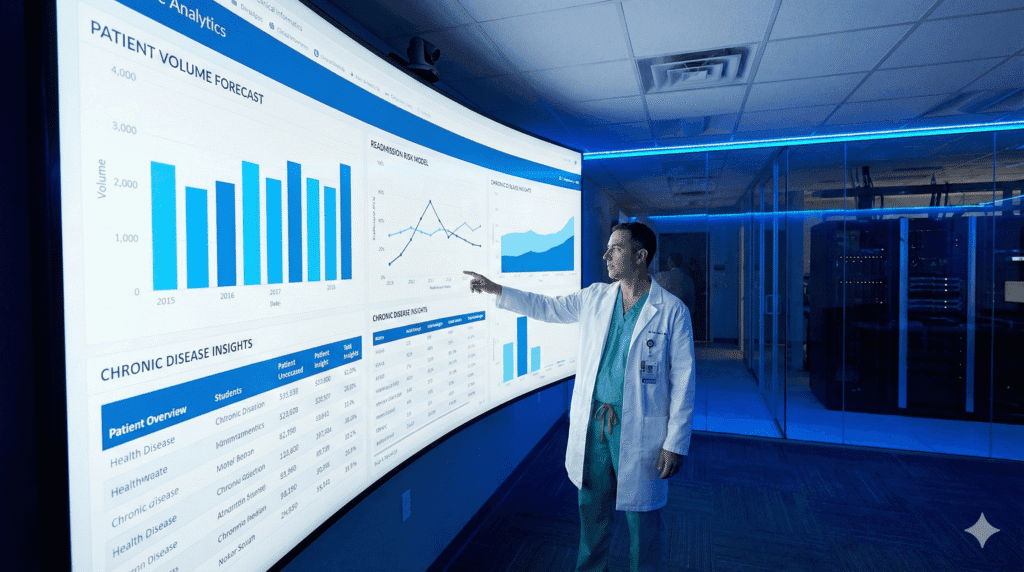
Introduction Healthcare is an industry built on data—from patient histories and diagnostic imaging to laboratory results, claims files, and operational metrics. Yet for decades, much of this data remained untapped, isolated in fragmented systems and unstructured formats. The digital transformation of healthcare, combined with the rise of analytics and machine learning, has unlocked a new era where data becomes actionable intelligence. Healthcare data analytics refers to the systematic examination of medical, operational, and financial data to improve patient outcomes, optimize workflows, and support value-based care. This article explores what healthcare analytics is, how it works, why it matters, and how organizations are using it to transform both clinical and administrative performance. =========================================== 1. What Is Healthcare Data Analytics? =========================================== Healthcare data analytics involves applying statistical techniques, predictive modeling, and data mining to healthcare information. Its purpose is to uncover trends, identify patterns, and support decisions across clinical, financial, and operational domains. Analytics can be applied to a wide array of data sources, including: The result is a deeper, more holistic understanding of both individual patients and broader populations. =========================================== 2. Types of Healthcare Analytics =========================================== Healthcare analytics is typically categorized into four main types, each serving a different purpose in the decision-making process. 1. Descriptive Analytics — Understanding What Happened Descriptive analytics answers questions like: It summarizes historical data to make trends and patterns visible. 2. Diagnostic Analytics — Understanding Why It Happened Diagnostic analytics digs deeper by analyzing: Example:If a hospital saw an unexpected rise in postoperative infections, diagnostic analytics could identify contributing factors such as: 3. Predictive Analytics — Understanding What Will Happen Predictive analytics uses machine learning and statistical algorithms to forecast outcomes such as: These insights help clinicians and administrators anticipate problems before they arise. 4. Prescriptive Analytics — Understanding What Should Be Done This is the most advanced type of analytics. It recommends actions based on predictive models. Examples: Prescriptive analytics drives proactive, rather than reactive, healthcare management. =========================================== 3. Why Healthcare Data Analytics Matters =========================================== Analytics has become essential to modern healthcare, and its impact spans multiple areas of care delivery. 1. Improving Patient Outcomes Healthcare analytics enhances outcomes by: Clinicians gain clarity, and patients receive more precise care. 2. Enabling Personalized and Precision Medicine Analytics helps tailor treatments using: Personalized medicine reduces trial-and-error care and improves therapeutic effectiveness. 3. Reducing Medical Errors Medical errors often stem from: Analytics flags anomalies and assists clinicians with real-time alerts, reducing risk and enhancing patient safety. 4. Enhancing Operational Efficiency Administrators use analytics to: This leads to smoother workflows and improved patient satisfaction. 5. Supporting Value-Based Care Models Healthcare is shifting from fee-for-service toward value-based care, which rewards: Analytics supports: Without analytics, value-based care cannot succeed. =========================================== 4. Key Use Cases of Healthcare Data Analytics =========================================== Analytics has practical applications across nearly every aspect of healthcare. 1. Readmission Prevention Predictive models identify patients most likely to be readmitted and help design targeted interventions. 2. Chronic Disease Management Analytics tracks long-term data trends for conditions like: Early detection of worsening trends helps prevent hospitalizations. 3. Emergency Department Optimization Real-time analytics: This reduces crowding and improves emergency care delivery. 4. Population Health and Public Health Monitoring Analytics helps organizations: This makes healthcare systems more resilient and better prepared for crises. 5. Financial Performance Management Organizations use analytics to: This strengthens financial sustainability. =========================================== 5. The Role of Machine Learning in Healthcare Analytics =========================================== Machine learning models significantly elevate the accuracy and value of analytics. 1. Predictive Risk Models These models analyze clinical, demographic, and behavioral data to predict: 2. Natural Language Processing (NLP) NLP extracts meaning from unstructured data such as: This unlocks insights hidden in text-based documentation. 3. Advanced Pattern Recognition AI systems detect patterns humans might miss, such as: This improves care precision and diagnostic accuracy. =========================================== 6. Challenges in Implementing Healthcare Analytics =========================================== While analytics offers significant benefits, healthcare organizations face several challenges. 1. Data Fragmentation Patient data is often stored in: Integrating these systems is essential. 2. Data Quality Issues Incomplete, inconsistent, or inaccurate data undermines analytics and AI models. 3. Privacy and Security Requirements Organizations must comply with: Data breaches can have severe consequences. 4. Shortage of Skilled Personnel Healthcare often lacks: Training and collaboration become crucial. =========================================== 7. The Future of Healthcare Data Analytics =========================================== The next phase of healthcare analytics includes innovations such as: Healthcare analytics is evolving into a core strategic asset for organizations worldwide. Conclusion Healthcare data analytics is more than a tool—it is a transformative force reshaping how care is delivered, financed, and improved. By providing deeper insight into patient trends, operational performance, and population health, analytics empowers healthcare organizations to make smarter decisions and deliver better outcomes. As digital health expands and data continues to grow, the importance of healthcare analytics will only increase, making it a foundational pillar of modern medical practice.
How Data Science Enhances Diagnostic Accuracy, Reduces Medical Errors, and Enables Faster Clinical Decision-Making

Introduction Healthcare is undergoing a profound transformation driven by the rapid growth of clinical data and the increasing need for precision in diagnosis and treatment. Data science—using algorithms, analytics, machine learning, and statistical modeling—has become essential in improving diagnostic accuracy, reducing medical errors, and accelerating clinical decision-making. Whether analyzing imaging studies, lab patterns, patient histories, or real-time monitoring data, data science equips healthcare providers with deeper insights and actionable intelligence. In this in-depth article, we explore how data science is changing the landscape of modern medicine, strengthening clinical workflows, improving patient safety, and supporting providers in making informed decisions. As healthcare systems continue to evolve, understanding the role of data science is essential for clinicians, administrators, researchers, and technology teams. =========================================== 1. How Data Science Improves Diagnostic Accuracy =========================================== Diagnostic precision is at the heart of effective healthcare. Traditional diagnostics rely heavily on clinician experience and manual interpretation, but data science enhances this process through automation, pattern recognition, and advanced analytics. 1. Using Predictive Modeling to Identify Diseases Earlier Predictive models analyze thousands of variables simultaneously, identifying patterns that clinicians might not detect in time. Examples: These models estimate likelihoods with remarkable accuracy, giving clinicians an early warning. 2. Enhancing Radiology Through Machine Learning Medical imaging produces more data than any human can analyze alone. Data science tools can: AI-powered imaging systems are now common in: This dramatically improves accuracy and reduces missed diagnoses. 3. Improving Lab Interpretation Data science analyzes: By comparing these findings to millions of historical datasets, AI provides interpretation suggestions that help guide further testing. =========================================== 2. How Data Science Reduces Medical Errors =========================================== Medical errors remain a significant challenge, contributing to preventable harm and increased healthcare costs. Data science reduces errors through automation, alerts, and consistent clinical decision assistance. 1. Automated Clinical Alerts in the EHR Data science models help EHR systems recognize: These alerts notify clinicians before a minor issue becomes life-threatening. 2. Standardizing Documentation and Reducing Ambiguity Natural Language Processing (NLP) tools analyze clinical notes for: By prompting clinicians to clarify information, data science reduces documentation-related mistakes. 3. Improving Medication Safety Data-driven medication tools evaluate: These safeguards prevent harmful prescribing errors. 4. Reducing Diagnostic Variability Clinicians vary in training, experience, and interpretation. Data science: This leads to more equitable and reliable care. =========================================== 3. How Data Science Enables Faster Clinical Decision-Making =========================================== Clinicians often work under substantial time pressure, managing large caseloads and increasingly complex patients. Data science accelerates decision-making by consolidating data, highlighting insights, and providing predictive recommendations. 1. Real-Time Dashboards for Clinical Situational Awareness Modern clinical dashboards use data science to display: These tools help clinicians make decisions in seconds rather than minutes. 2. Predictive Triage and Risk Stratification Emergency departments use data science to: This optimizes patient flow and reduces wait times. 3. Supporting Chronic Disease Management Chronic disease care requires long-term monitoring. Data science supports: These insights allow clinicians to intervene earlier. 4. Accelerating Research and Clinical Trials Data science automates: This reduces research time from months to minutes. =========================================== 4. Real-World Use Cases of Data Science in Healthcare =========================================== 1. Sepsis Detection Machine learning models detect sepsis 3–6 hours earlier than traditional scoring systems. 2. Cardiology Risk Prediction Algorithms predict: 3. Oncology Diagnostics Data science identifies tumor progression, genomic markers, and treatment responsiveness. 4. Population Health Predictive analytics identifies communities at high risk for certain diseases. 5. Personalized Medicine AI tailors treatments to each patient’s genetic and clinical profile. =========================================== 5. Challenges and Ethical Considerations =========================================== Despite its benefits, data science must be used responsibly. 1. Data Privacy and Security Compliance with: is non-negotiable. 2. Algorithmic Bias Biased datasets may result in inequitable care.Continuous validation is essential. 3. Transparency and Explainability Clinicians must understand: Black-box models can undermine trust. 4. Data Quality Issues Garbage in = garbage out.High-quality datasets are essential for accurate predictions. =========================================== 6. The Future of Data Science in Healthcare =========================================== The future points toward: Data science will evolve from a supportive tool into a core component of healthcare delivery. Conclusion Data science is fundamentally reshaping healthcare by improving diagnostic accuracy, reducing harmful medical errors, and enabling faster and more informed clinical decision-making. Its power lies in its ability to convert complex data—clinical notes, imaging, labs, and real-time monitoring—into actionable insights that clinicians can rely on. As health systems continue to adopt AI-driven tools, data science will play an increasingly central role in creating safer, more efficient, and more personalized care environments.